How Ohio Organizes Look After Opioid and Co-Occurring Drug Addiction
Ohio’s approach to opioid and co-occurring drug addiction care is built around a practical idea: people do not recover in one setting, at one speed, or through one clinical method. The state’s system is designed as a continuum, which means care can begin at a point of crisis, move through stabilization, continue into therapy and medication support, and extend into housing, peer connection, and longer-term recovery planning.
That structure matters because opioid addiction rarely arrives alone. Many people seeking help also face alcohol use, stimulant use, sedative misuse, trauma symptoms, depression, anxiety, unstable housing, legal pressure, family disruption, or medical complications. A narrow program that offers only one service may help for a short window, but it often leaves major risks untouched. Ohio’s legal and treatment framework recognizes that drug addiction treatment has to be organized across levels of intensity, not confined to a single appointment type or facility model.
At the center of this structure is a community-based continuum of care. Ohio law calls for services that include detoxification, outpatient treatment, medication-assisted treatment, peer support, residential services, recovery housing, and multiple pathways to recovery. In practice, this gives local systems and certified providers a shared map. A person may need withdrawal management first, while another may be ready for intensive outpatient care and medication. Someone else may need residential alcoholism inpatient programs treatment because home is not safe or stable enough for early recovery. The framework is broad because the need is broad.
The reason Ohio uses a continuum rather than a single treatment model
Opioid addiction can be medically dangerous, behaviorally complex, and socially destabilizing. A person may enter care after an overdose, after a family intervention, through a court referral, following job loss, or because withdrawal has become impossible to manage alone. Co-occurring drug use adds another layer. Fentanyl exposure, stimulant use, benzodiazepine misuse, and alcohol use can change the clinical picture quickly. The same person may need medical monitoring, psychiatric assessment, therapy, medication support, and help rebuilding daily routines.
A continuum of care allows treatment to match the person’s current risk. If someone is actively withdrawing, therapy alone is usually not the immediate answer. If someone is medically stable but using daily, outpatient counseling once a month will likely be too light. If someone completes residential treatment but returns to an unsafe environment with no recovery supports, the gains made in treatment can be fragile. Ohio’s model attempts to close those gaps by organizing care from the earliest point of stabilization through longer-term recovery support.
The word “community-based” is important. It signals that care is not meant to sit only in hospitals or isolated facilities. Recovery often depends on what happens after the acute phase: transportation to appointments, safe housing, access to medication, peer relationships, employment routines, family boundaries, and continuing clinical support. A good treatment plan pays attention to those details because relapse risk often rises in ordinary places, not only in obvious crises.
Certification and oversight create a baseline for treatment providers
Ohio treatment providers that deliver substance use disorder treatment must be certified by the Ohio Department of Mental Health and Addiction Services under state law. Certification does not make every program identical, and it does not guarantee that every person will respond to a given service. It does, however, create a regulatory baseline for organizations that provide drug addiction treatment.
That baseline is significant for families and referral sources. When people are desperate to find help, they may search online, call the first number they see, or choose a program based on a short conversation. Certification gives Ohio a way to distinguish recognized treatment providers from informal or unsupported services. It also supports a more organized care network, where detox, outpatient care, residential treatment, medication-assisted treatment, and recovery supports can operate within a state-recognized framework.
For individuals and families, certification should be one of the first practical questions. Not the only question, but a necessary one. The next questions should focus on fit: Does the provider treat opioid addiction? Does it address co-occurring drug use? Does it offer or coordinate medication-assisted treatment? What happens after detox? How does the program help with mental health symptoms, family involvement, relapse risk, and discharge planning? These questions matter because the official structure only works when a person is placed at the right level of care and then moved thoughtfully through the next steps.
Detoxification is a starting point, not a full recovery plan
Ohio’s continuum includes ambulatory and sub-acute detoxification. Those terms refer to different levels of withdrawal management, and the distinction matters. Some people can be supported safely in a less intensive setting, while others need closer monitoring because their symptoms, substance use history, medical condition, or co-occurring drug use raises risk.
Opioid withdrawal is often described as nonfatal compared with withdrawal from alcohol or benzodiazepines, but that shorthand can be misleading in real life. Severe vomiting, dehydration, uncontrolled pain, agitation, insomnia, and intense cravings can push someone back to use quickly. If fentanyl or other potent opioids are involved, tolerance and withdrawal patterns can complicate the early phase of care. When other substances are present, the situation can become even less predictable.
Detox helps a person get through the acute physical stage. It can reduce immediate distress and create a safer doorway into treatment. But detox by itself is not comprehensive treatment for drug addiction. Without follow-up care, the person may leave physically stabilized but still face cravings, trauma triggers, untreated mental health symptoms, social pressure, and the same environment that supported use. A strong Ohio care pathway treats detox as the first handoff, not the finish line.
This is where care coordination becomes decisive. A Addiction Treatment in Ohio detox program that simply discharges someone with a phone number leaves too much to chance. A better transition connects the person to residential treatment, outpatient services, medication-assisted treatment, peer support, or recovery housing, depending on what the assessment shows. The days immediately after withdrawal management can be high-risk. Planning should begin early, not on the morning of discharge.
Outpatient care gives structure while people remain in daily life
Ohio’s continuum includes both non-intensive and intensive outpatient services. This range is essential because not everyone needs 24-hour care, and not everyone can step away from work, parenting, school, probation obligations, or caregiving responsibilities. Outpatient treatment allows people to receive therapy and clinical support while continuing to live in the community.
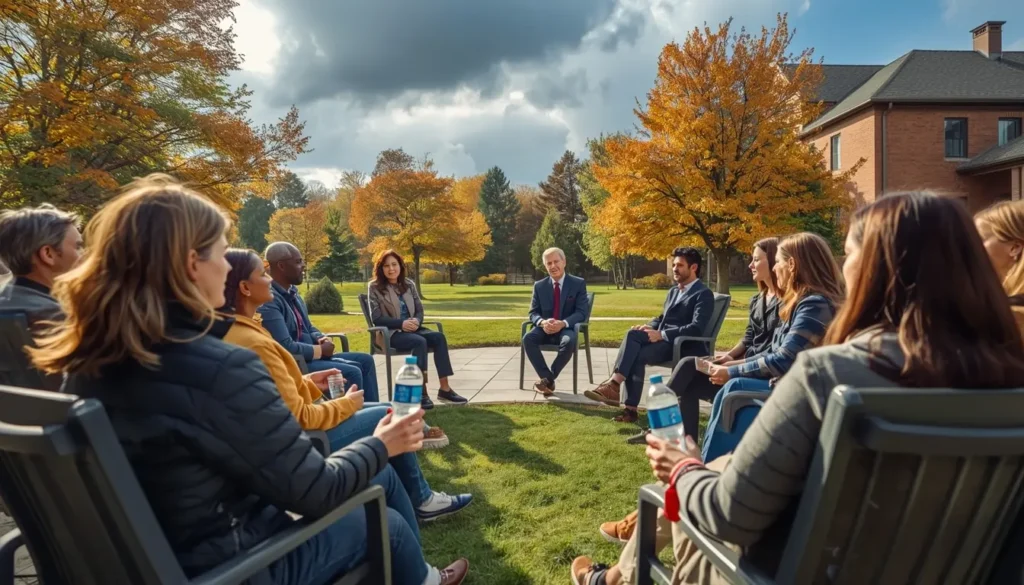
Non-intensive outpatient care may fit someone who has lower immediate risk, stable housing, reliable transportation, and enough support to practice recovery skills between sessions. Intensive outpatient care is more structured. It can be appropriate when someone needs frequent contact, group therapy, relapse-prevention work, and accountability, but does not require residential treatment or has already stepped down from it.
The trade-off is straightforward. Outpatient care preserves daily life, but daily life also brings exposure to triggers. A person may leave a productive therapy session and return to a home where others are using substances. They may have access to old contacts, conflict with a partner, untreated insomnia, or job stress that spikes cravings. For outpatient care to work, the plan has to be honest about those conditions.
Good outpatient planning asks practical questions. Is the person able to attend consistently? Is transportation realistic? Are medications secure? Is there a plan for evenings and weekends? Are family members supportive, exhausted, angry, or actively using? Are there co-occurring mental health symptoms that need direct care? Outpatient treatment can be effective, but only when it is matched to the person’s actual environment rather than an idealized version of it.
Medication-assisted treatment is part of the continuum
Ohio’s required continuum includes medication-assisted treatment. This is a key part of modern opioid addiction care. Medication-assisted treatment, often shortened to MAT, combines approved medication with counseling, monitoring, and recovery support. For opioid use disorder, medication can reduce cravings, support stabilization, and lower the cycle of withdrawal-driven use.
The inclusion of MAT in the state’s continuum reflects an important clinical reality: willpower alone is not a treatment plan for opioid addiction. Opioids change tolerance, stress response, reward pathways, and daily functioning. Many people want to stop but cannot sustain recovery because withdrawal and craving repeatedly overwhelm their intentions. Medication can create enough stability for therapy, family repair, employment, and health care to begin working.
There are still communities where stigma around MAT remains strong. Some people hear medication-assisted treatment described as “replacing one drug with another.” That phrase is not clinically useful. It ignores the difference between compulsive, harmful substance use and medically supervised treatment. It can also discourage people from using an option that may be appropriate for them.
Medication is not the only pathway, and Ohio’s framework acknowledges multiple pathways to recovery. But MAT belongs in the continuum because many people with opioid addiction benefit from it. The decision should be individualized, clinically guided, and revisited over time. A person’s history, overdose risk, co-occurring drug use, pregnancy status, mental health symptoms, and prior treatment experiences can all affect the plan.
Peer support and recovery housing address the parts of recovery that treatment sessions cannot hold alone
Ohio’s continuum includes peer support and recovery housing. These services recognize that recovery is lived hour by hour, not only during scheduled clinical appointments.
Peer support can reduce isolation in a way that professional counseling cannot always replicate. A trained peer with lived experience can help someone navigate ambivalence, shame, early recovery routines, and the practical friction of rebuilding life. Peer support is not a substitute for clinical treatment, especially when medical or psychiatric risks are present. Its value is different. It offers credibility, companionship, and day-to-day recovery orientation.
Recovery housing serves another purpose. Many people leave detox or residential treatment without a stable or substance-free place to live. Returning to the same setting can undo progress quickly, especially when drug use is present in the home or neighborhood relationships are tied to use. Recovery housing can provide a more supportive living environment while a person continues outpatient care, works on employment, attends meetings or peer support, and rebuilds structure.
Housing is often where treatment plans become real. A discharge plan may look strong on paper, but if the person sleeps on a couch in a chaotic apartment, misses appointments because of transportation problems, and has no privacy for telehealth or medication storage, the plan weakens. Recovery housing is one way Ohio’s continuum tries to bridge the gap between treatment engagement and daily stability.
Residential services remain important for higher-risk situations
Ohio’s continuum includes residential services, and for many people, this level of care provides the protected environment needed for early recovery. Residential treatment can be appropriate when substance use is severe, relapse risk is high, withdrawal has recently occurred, mental health symptoms require close support, or the home environment makes outpatient care unrealistic.
Residential care gives time and space. That may sound simple, but it can be clinically powerful. People who have spent months or years organizing each day around obtaining, using, hiding, or recovering from substances often need a controlled pause. In residential treatment, days can be structured around therapy, medication support when appropriate, sleep normalization, nutrition, group work, family communication, and relapse-prevention planning.
The limitation is that residential treatment is temporary. Its purpose is not to create a bubble that disappears the moment someone leaves. The strongest residential programs think about discharge from the beginning. Where will the person live? What outpatient provider will continue care? Is medication-assisted treatment being continued or initiated? Is peer support arranged? Does family need education? Does the person need recovery housing? Residential treatment should connect to the next level, not stand apart from the rest of the system.
OARRS and the role of safer prescribing
Ohio’s OARRS system, the statewide electronic database for controlled-substance dispensing information, is another part of the broader addiction-care environment. It supports safer prescribing and can help connect people at risk of substance use disorder to resources. Prescription monitoring programs are not treatment programs, but they can influence how risk is identified.
OARRS gives prescribers and pharmacists controlled-substance dispensing information that can inform clinical decisions. When used responsibly, this kind of database can help identify concerning patterns, reduce duplicative prescribing, and prompt conversations about safety. It may also reveal situations where a person needs screening, education, or referral to treatment.
There is a balance to strike. Monitoring should not become punishment, and fear of scrutiny should not prevent people from receiving appropriate pain care or addiction treatment. The best use of a system like OARRS is clinical, not moralistic. It helps professionals see risk more clearly and respond with safer prescribing, patient education, and referral when needed.
For people with drug addiction, especially opioid addiction, the way risk is addressed can determine whether they stay engaged. A shaming conversation may push someone away. A direct, respectful conversation can open a door: “I’m concerned about what I’m seeing, and I want to talk about support that could help.” Ohio’s monitoring system is most useful when it becomes part of that kind of response.
Multiple pathways to recovery are a necessity, not a slogan
Ohio law includes multiple pathways to recovery within the continuum. That phrase matters because recovery does not look identical for every person. Some people build recovery around medication-assisted treatment and outpatient therapy. Others need residential treatment first. Some rely heavily on peer support or mutual-help communities. Some need trauma-focused therapy, family repair, mental health treatment, or recovery housing before progress holds.
The idea of multiple pathways also helps reduce false choices. Medication and therapy are not enemies. Residential treatment and peer support can complement each other. Clinical care and community recovery can operate together. A person may begin with one pathway and later add another as their needs change.
Several factors often shape the right pathway:
- The severity and duration of opioid and co-occurring drug use.
- Current withdrawal risk, overdose risk, and medical stability.
- Mental health symptoms, trauma history, and safety concerns.
- Housing stability, family environment, transportation, and employment demands.
- Prior treatment experiences, including what helped and what did not.
Those factors change over time. A person who needs residential care in January may be ready for intensive outpatient care in March. Someone who starts in outpatient treatment may need a higher level of care after repeated returns to use. The continuum works best when movement between levels is treated as clinical adjustment, not failure.
How a person may move through care in Ohio
A realistic care pathway often begins with assessment. The assessment should clarify substances used, frequency, route of use, withdrawal history, overdose history, mental health symptoms, medical issues, medications, living situation, legal pressure, family support, and immediate safety. For opioid and co-occurring drug addiction, the assessment should not focus only on the primary substance. Co-occurring drug use can change withdrawal needs, medication decisions, relapse-prevention planning, and level-of-care placement.
One person may enter through detox because withdrawal is severe and ongoing use is no longer manageable. After stabilization, that person may step into residential services, then move to intensive outpatient care, continue medication-assisted treatment, and use peer support and recovery housing. Another person may be medically stable enough to begin with outpatient services and MAT, while working and living at home. A third person may need residential mental health support because psychiatric symptoms and drug use are reinforcing each other.
None of these pathways is automatically superior. The right question is not, “Which service is best?” The better question is, “Which combination of services fits this person’s risk, readiness, environment, and clinical needs right now?” That question is harder, but it leads to better planning.
Families often want a single answer. They may ask whether detox is enough, whether inpatient rehab is necessary, or whether medication should be used. The honest answer is that treatment decisions depend on the full picture. A person using opioids daily, living with others who use, and repeatedly overdosing needs a different plan than someone who has stable housing, no recent overdose, strong family support, and early motivation for outpatient care. Ohio’s continuum exists because both people need help, but not the same help in the same order.
Co-occurring drug addiction requires careful clinical judgment
The title of Ohio’s continuum specifically includes opioid and co-occurring drug addiction. That wording reflects what treatment providers regularly see: substance use patterns overlap. A person may primarily identify opioids as the problem but also use stimulants to stay awake, benzodiazepines to come down, alcohol to manage anxiety, or cannabis to sleep. Each additional substance can affect mood, sleep, impulsivity, overdose risk, and withdrawal.
Co-occurring drug use can also obscure diagnosis. Anxiety may be a longstanding condition, a withdrawal symptom, a stimulant effect, or all three. Depression may predate opioid use or follow months of instability and loss. Sleep problems may reflect trauma, withdrawal, medication changes, or environmental stress. Treatment has to sort these issues carefully over time rather than assuming everything will resolve after a few sober days.
This is why an integrated continuum matters. Detox may address immediate physical stabilization. Medication-assisted treatment may reduce opioid cravings. Therapy may address trauma, coping skills, and decision-making. Peer support may reduce isolation. Recovery housing may create a safer environment. Outpatient care may support ongoing accountability. No single service carries the whole burden.
Where private providers fit into Ohio’s care landscape
Certified providers operate within Ohio’s broader treatment structure, and individual organizations may offer different combinations of services. Recreate Behavioral Health Network identifies its Ohio location, Recreate Behavioral Health of Ohio, also referred to as Recreate Ohio, as being in Gahanna, just outside Columbus. The organization says the Ohio facility offers detox, residential or inpatient rehab, and outpatient treatment. It also describes the location as providing a full continuum of care and offering primary mental health services in a residential treatment setting.
That kind of service range can matter for people who need transitions between levels of care. When detox, residential treatment, outpatient programming, and mental health support are available through one organization or coordinated care model, handoffs may be easier to manage. The details still matter, of course. A family should ask what services are available for a specific patient, what level of care is recommended after assessment, how medication-assisted treatment is handled, and how discharge planning connects to ongoing recovery supports.
Recreate says treatment at its Ohio facility may include cognitive behavioral therapy, dialectical behavior therapy, EMDR, medication-assisted treatment, individual therapy, group therapy, family therapy, and couples therapy. It also says holistic supports may include yoga and mindfulness, art therapy, adventure therapy, equine therapy, Reiki, acupuncture, chiropractic care, fitness and wellness activities, and nutrition education.
Those offerings illustrate a broader point about drug addiction treatment: clinical work and supportive services often sit side by side. Evidence-informed therapies such as CBT and DBT can help with thinking patterns, emotion regulation, cravings, relationships, and relapse prevention. EMDR may be used when trauma symptoms are part of the clinical picture. Family and couples therapy can address communication, boundaries, trust, and the strain that addiction places on households. Holistic supports may help some people reconnect with their bodies, manage stress, or tolerate discomfort without returning to substance use.
The practical caution is that supportive services should not replace core addiction treatment. Yoga, art, fitness, nutrition education, or wellness activities can add value, especially in residential settings where daily structure matters. But opioid addiction and co-occurring drug addiction also require assessment, safety planning, medication consideration, therapy, discharge planning, and continuing care. A polished list of amenities is less important than whether the program can match the person’s clinical needs and move them safely through the continuum.
What families should look for when evaluating care
Families often enter the process under pressure. The person may be in withdrawal, leaving the hospital, facing legal consequences, or finally willing to accept help after months of refusing. Urgency can make every program sound good. A more grounded approach is to ask direct questions and listen for specific answers.
Useful questions include:
- Is the provider certified to deliver substance use disorder treatment in Ohio?
- Which levels of care are available, including detox, residential, outpatient, MAT, peer support, or recovery housing coordination?
- How does the program assess and treat co-occurring drug use and mental health symptoms?
- What happens after the first phase of care, and who schedules the next appointment?
- How are family involvement, discharge planning, relapse risk, and medication continuity handled?
The answers should be concrete. “We individualize care” is not enough by itself. A strong provider can explain how assessment works, how level-of-care decisions are made, what therapies or medications may be considered, how crises are handled, and how continuing care is arranged. They should also be clear about what they do not provide. No program does everything for everyone, and honest limits are safer than vague promises.
Families should also prepare for ambivalence. A person may agree to treatment in the morning and want to leave by evening. They may be sincere and frightened at the same time. They may reject residential care but accept outpatient treatment. They may resist medication because of stigma. They may complete detox and then insist they are fine. These moments require calm persistence. The continuum gives options, but engagement is still human work.
The importance of step-down planning
Step-down planning is one of the most important parts of addiction care, and one of the easiest to underestimate. The transition from a higher level of care to a lower one can expose the person to more freedom, more triggers, and less immediate supervision. That does not mean step-down is bad. It means it needs planning.
A person leaving residential treatment may need intensive outpatient services rather than standard weekly therapy. Someone completing detox may need immediate medication-assisted treatment and a same-week therapy appointment. A person returning home may need family boundaries clarified before discharge. Someone without stable housing may need recovery housing arranged before the final day of treatment. These are not small administrative details. They are relapse-prevention measures.
Continuity is especially important for medication. If medication-assisted treatment begins in one setting but is not continued after discharge, the benefit may be interrupted. Appointment gaps can become dangerous. The same is true for psychiatric medications, therapy, and peer support. Recovery momentum depends on keeping the next step close enough that the person does not have to rebuild the plan alone.
A system built for movement, not perfection
Ohio’s organization of care for opioid and co-occurring drug addiction is not based on the idea that recovery is linear. People may move forward, stall, return to use, re-enter care, change medications, shift levels of treatment, or discover mental health needs that were hidden during active use. A continuum makes room for that movement.
The strength of this model is its breadth. Ambulatory and sub-acute detoxification address early stabilization. Non-intensive and intensive outpatient services support treatment in the community. Medication-assisted treatment gives an evidence-based option for opioid addiction. Peer support and recovery housing address the lived environment of recovery. Residential services provide structure for higher-risk needs. Multiple pathways recognize that no single philosophy or setting fits everyone.
The challenge is execution. A continuum only helps when people can access the right service at the right time, when providers communicate, when discharge plans are realistic, and when treatment addresses the whole person rather than a single substance. Families and patients can support that process by asking informed questions, verifying certification, staying alert to transitions, and treating ongoing care as essential rather than optional.
Ohio’s framework offers a practical map. The work is to use it well: stabilize the immediate crisis, match the level of care to the person’s real risks, address opioid and co-occurring drug addiction together, keep mental health in view, and make sure every first step has a next step close behind it.